

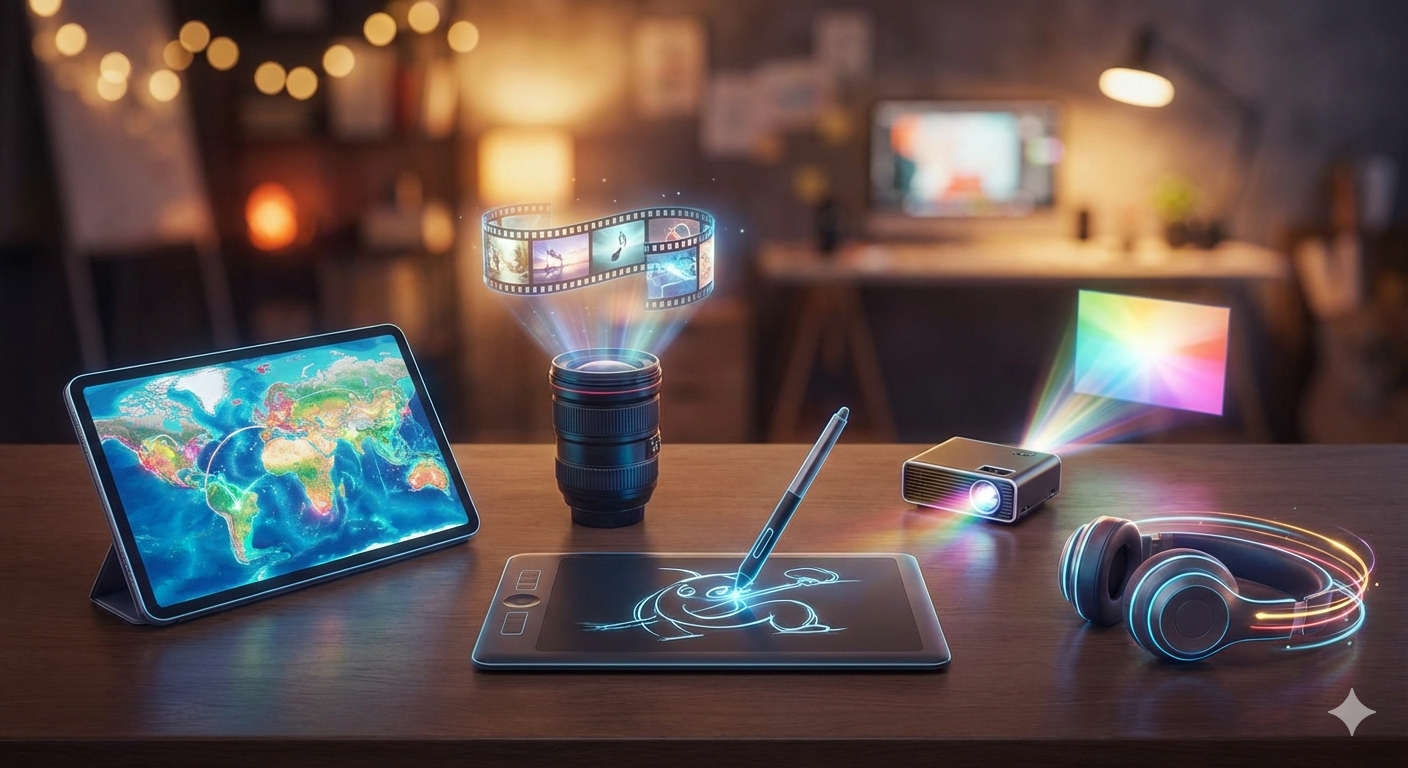
In the modern digital landscape, the phrase “a picture is worth a thousand words” has evolved into a fundamental law of engagement. Whether you are a brand looking to connect with a global audience or a solo creator building a personal narrative, the ability to weave complex ideas into a compelling visual format is no longer just a skill—it is a necessity. Visual storytelling bridges the gap between raw data and emotional resonance, allowing information to be retained far longer than text alone. As attention spans continue to tighten, the demand for high-quality, cinematic, and efficient content has skyrocketed, leading to a new era of creative ecosystems that democratize high-end production.
To stay ahead, creators must leverage advanced platforms that simplify the technical side of creation while amplifying the artistic vision. The following selection highlights five transformative tools designed to streamline your workflow and breathe life into your narrative concepts.
1. Invideo: The Frontier of Prompt-to-Production
Invideo has redefined the boundaries of digital creation by offering an intuitive interface that handles the heavy lifting of production through sophisticated automation. This platform allows users to transform a simple text concept into a full-length, narrated masterpiece in minutes, effectively removing the barriers that once required expensive equipment or years of technical training. By integrating advanced ai video capabilities into the heart of its workflow, the system can generate scripts, select relevant stock footage, and apply professional-grade transitions without manual intervention.This level of automation is particularly valuable for marketers and educators who need to produce consistent, high-quality content at a rapid pace while maintaining a distinct and polished aesthetic.
Beyond its desktop capabilities, the platform emphasizes accessibility and mobility to ensure that inspiration can be captured and polished anywhere. Users can seamlessly transition their projects across devices, utilizing the ai video generator app to create, edit, and publish content while on the move. This mobile extension is not just a companion but a fully-functional creative hub that supports voice cloning, multi-language translation, and real-time editing through natural language commands. By focusing on user convenience and advanced generative technology, this tool empowers creators to maintain a professional edge in an increasingly competitive visual market.
2. Canva: The Universal Design Language
If visual storytelling has a “home base” for non-designers, it is undoubtedly Canva. This ecosystem has expanded from a simple graphic editor into a comprehensive suite that covers everything from interactive presentations to branded social media assets. Its strength lies in its vast library of templates, which are meticulously crafted to follow current design trends and psychological triggers. For a storyteller, this means having a foundation of layouts that are already optimized for readability and emotional impact.
Canva’s recent push into generative design has further solidified its position as an essential tool. Features like the Magic Studio allow creators to generate custom imagery from text, remove backgrounds with a single click, and even transform static documents into dynamic presentations. By providing a unified space where brand kits, collaborative assets, and publishing tools coexist, it ensures that your story remains visually consistent across every touchpoint, from an Instagram story to a corporate report.
3. Midjourney: Mastering Atmospheric World-Building
For those whose stories require a specific “vibe” or a highly stylized aesthetic, Midjourney is the gold standard of generative art. Unlike standard stock photography, which can often feel generic or disconnected from a unique brand voice, Midjourney allows for the creation of hyper-realistic or surreal visuals that are tailored to the exact emotional beats of your narrative. It excels at lighting, texture, and composition, making it the preferred choice for concept artists and authors who need to visualize complex worlds or abstract themes.
Using this tool effectively involves a process of “creative direction” rather than traditional drafting. By refining descriptive prompts, you can guide the engine to produce cinematic frames that look like they were pulled from a big-budget film. These visuals serve as the perfect backdrop for blog headers, video backgrounds, or social media teasers. When your story needs to stand out in a sea of recycled imagery, the unique artistic output of this platform provides the visual authority necessary to capture and hold an audience’s attention.
4. Adobe Express: Professional Polish with Modern Speed
Adobe Express serves as the perfect bridge between the high-end power of the Creative Cloud and the speed required by modern social media managers. It brings the precision of industry-standard imaging technology into a much more accessible and faster interface. For visual storytellers, this tool is indispensable for maintaining brand integrity. It allows for the easy application of brand colors, fonts, and logos across a wide range of media types, ensuring that even a quick update feels like a planned part of a larger campaign.
The platform is particularly strong in its ability to handle “quick actions” that would typically take much longer in more complex environments. Whether it is animating a static logo for a video intro or resizing a complex graphic for ten different social channels at once, the efficiency gain is massive. By removing the friction from the technical side of branding, it frees up the creator to focus on the “why” of the story rather than the “how” of the layout.
5. Runway: Elevating Narrative with Generative Motion
Runway represents the next logical step in the evolution of visual media: the ability to generate and manipulate motion with the same ease as text. This platform is at the cutting edge of generative motion, offering tools that can turn static photos into moving scenes or alter the environment of a filmed clip with incredible realism. For storytellers, this opens up a world of “visual effects” that were previously reserved for professional studios.
Imagine being able to change the weather in a scene, remove an unwanted object, or generate a slow-motion cinematic sequence from a simple description. Runway’s technology allows for a level of experimental storytelling that encourages bold creative choices. It is a powerful engine for those who want to push the boundaries of what is possible in digital media, allowing for a fusion of traditional cinematography and AI-enhanced imagination that creates truly unforgettable viewer experiences.
Conclusion
The evolution of these platforms has fundamentally changed the landscape of digital communication, making it possible for anyone with a story to tell to do so with professional-grade quality. By integrating these tools into your creative workflow, you shift the focus from the limitations of your technical skills to the depth of your imagination. Whether you are using the latest generative motion engines or a mobile-first interface, the goal remains the same: to create visuals that don’t just occupy space on a screen, but leave a lasting impression on the mind of the viewer